
Redesigning an Older Home: How to Modernise Without Losing Character

An older home often carries the qualities that many new homes work hard to create: proportion, mature materials, established gardens, layered rooms and a sense of memory. At the same time, it may no longer support the way the household lives. Rooms can feel dark, heavy, poorly lit or disconnected from daily routines.
A successful redesign does not erase the past. It identifies what gives the home value and then refines what is no longer working. For homes in Paarl, Stellenbosch, Franschhoek and established Winelands estates, this approach is particularly important because the best interiors often come from balancing permanence with practical renewal.
Old home interior redesign should begin with a careful audit of what to preserve, what to rework and what to replace. Architectural features, quality materials and meaningful pieces can be retained, while lighting, layout, finishes, storage, window treatments and furnishings are updated to improve comfort, flow and long-term use.
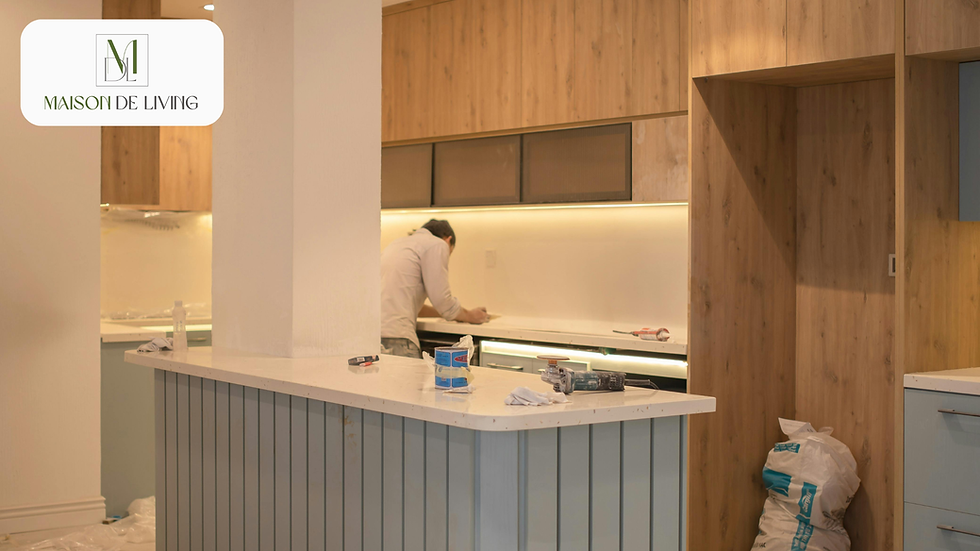
Start with an interior audit
Before selecting new finishes or furniture, the existing home should be read carefully. Which rooms already have good proportions? Where does natural light work well? Which materials have aged beautifully? Which pieces carry personal or design value? These questions help prevent unnecessary replacement.
An interior audit also shows where the home is underperforming. A formal room may be unused because the seating is uncomfortable. A dark passage may need wall finishes, lighting or artwork rather than structural change. A bedroom may need better window treatments and storage rather than a full redesign.
Preserve what gives the home its authority
Older homes often have details that should guide the redesign: timber doors, fireplaces, stone, original floors, generous skirtings, ceiling heights, built-in cabinetry or garden outlooks. These elements do not always need to remain untouched, but they should be treated as part of the design brief.
Wallpaper’s feature on a modernist Montréal home renovation shows the value of staying faithful to a property’s architectural roots while introducing contemporary updates: a renovation that stays faithful to its roots. The principle is useful for any older home: modernisation is most successful when it strengthens the original character rather than competing with it.

Modernise function before changing the mood
Many redesign projects begin with surface changes, but function should lead. Poor lighting, awkward circulation, insufficient storage and badly placed furniture will continue to affect the home even if the colours are updated. A full redesign should consider how people move through the house, where they gather, how they use bedrooms, how they entertain and where the home feels least comfortable.
Maison d’Living’s interior design and styling services can help homeowners look beyond a single room and assess the whole property as a connected interior. This matters in older homes, where one change often affects the character and balance of neighbouring spaces.
Update finishes with restraint
Older interiors often feel dated because of accumulated finishes rather than age itself. Heavy window treatments, dark paint, tired upholstery, glossy tiles or mismatched flooring can make a home feel visually heavy. Updating these elements can make a substantial difference without stripping away character.
Wall colour, specialist finishes, wallpaper, curtains and upholstery should be selected in relation to the existing architecture. Maison d’Living’s wallpaper and wall finishes service can support this kind of considered update, especially when walls need texture, depth or softness rather than a flat repaint.

Rework before replacing
Existing furniture and decorative pieces should not be dismissed too quickly. A well-made chair, table, cabinet or mirror may need a different position, new upholstery or a calmer surrounding palette. The redesign process should distinguish between what is tired and what is valuable.
Replacement is sometimes necessary, particularly where scale, comfort or quality is wrong. The goal is not to keep everything. It is to make each decision deliberately, so the final interior feels lighter, more useful and still connected to the home’s history.
Quick questions homeowners are asking
How do you redesign an older home?
Begin by assessing the existing architecture, materials, lighting, furniture and room use before deciding what to preserve, rework or replace.
What should you keep when renovating interiors?
Keep elements with architectural value, good craftsmanship, emotional meaning or strong proportions, provided they can support the new design direction.
How can an old home feel modern but still characterful?
Improve function, lighting and finishes with restraint while allowing original features and meaningful pieces to remain visible.
Considering the redesign of an established home? Maison d’Living can help clarify what to retain, refine and replace. Request a design consultation before major decisions are made.


Comments