
Curtains vs Blinds: Making the Right Choice for Estate Homes

Window treatments are often treated as a final decorative decision, but in estate homes they should be considered much earlier. Large panes of glass, open-plan living areas, double-volume rooms and exposed bedroom suites all ask more from curtains and blinds than simple coverage.
Choosing between curtains and blinds is not a matter of preference alone. It is a decision about architecture, orientation, privacy, acoustics, thermal comfort and the level of softness a room needs. The strongest interiors usually begin with the function of each window, then refine the material and finish.
Direct answer: For estate homes, curtains are best when a room needs softness, acoustic comfort, scale and a more finished interior mood. Blinds are best for precise light control, privacy and clean architectural lines. Many refined homes use both, layering blinds for function and curtains for warmth, proportion and elegance.
For larger homes, this decision is often best resolved as part of a full-room plan rather than as a late installation item. Maison d’Living’s curtains, blinds and soft furnishings service considers light, privacy, fabric, hardware and the way each room is used.
The role of window treatments in estate homes
Estate homes often have generous proportions, high ceilings and broad glazing. These qualities create beautiful light, but they also make window treatments more consequential. A small apartment window can tolerate a simple solution. A large Paarl or Val de Vie living room usually needs a considered treatment that respects the scale of the architecture.
Window treatments influence how the home feels throughout the day. Morning light may be welcome in a kitchen, while afternoon glare can make a living room uncomfortable. Bedrooms need privacy and light management. Dining rooms may need softness in the evening. Each room should be assessed on use, aspect and exposure before choosing a treatment.
Architectural Digest has also written about the long-standing role of curtains in architecture, noting their practical and atmospheric value beyond decoration; that perspective is useful when deciding whether a window treatment should simply disappear or actively complete a room.
Curtains: softness, scale and acoustic comfort
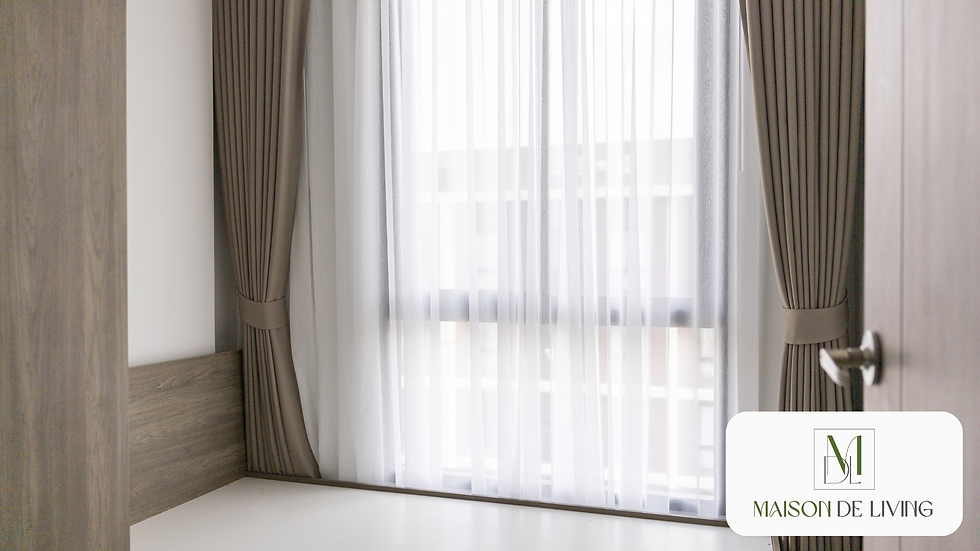
Curtains bring fabric, movement and visual warmth into a room. They are especially effective in larger interiors where hard surfaces, stone, timber, glass and high ceilings can make spaces feel exposed. A well-made curtain can settle a room without making it feel heavy.
Full-height curtains are often the most elegant option where windows are tall or where the architecture needs vertical emphasis. They can make a room feel more composed by extending the eye upward and framing views rather than interrupting them.
Fabric also has a practical role. Curtains can soften sound, reduce glare and add a degree of insulation. This is particularly valuable in open-plan living areas where conversation, entertaining and daily family movement all happen in one shared volume.
Blinds: precision, privacy and architectural restraint
Blinds are useful where a room needs careful light control without introducing large amounts of fabric. They work particularly well in bathrooms, kitchens, studies and secondary bedrooms where privacy and clean lines matter.
Roman blinds can feel softer and more decorative, while roller or screen blinds suit rooms that need a quieter architectural presence. Timber or Venetian blinds can add texture, but they need to be chosen carefully so they do not make a room feel busy or office-like.
Blinds are also practical where furniture sits close to a window, where doors open frequently, or where curtains would be difficult to stack. In these situations, a blind can provide function without interfering with circulation.
Where window treatments affect the wider mood of the home, they can also be aligned with broader interior design and styling services so that proportions, furniture placement and finishes work together.
When layering is the most refined option

Many estate homes benefit from a layered treatment. A sheer curtain can diffuse daylight and soften views during the day, while a lined curtain or blind can provide privacy and evening comfort. This is rarely about excess. It is about giving a room more than one mode of use.
Layering is especially useful in primary bedrooms, formal lounges and west-facing living spaces. A single treatment may not manage morning light, afternoon glare and night-time privacy equally well. A layered approach allows the room to adapt without compromising the design language.
A simple comparison for homeowners
Curtains generally suit rooms that need softness, fullness, sound absorption and a more furnished atmosphere. Blinds suit rooms that need precision, practicality and restraint. Sheers suit rooms that need filtered daylight, privacy and a gentle connection to the view.
The best choice is not always the most decorative one. It is the one that answers the window’s role in the room. Before choosing, ask what the window must solve: privacy, glare, heat, acoustics, scale, or atmosphere. The answer will usually narrow the decision clearly.
What to avoid

Avoid choosing short curtains for tall windows, unless the architecture specifically calls for it. Avoid overly thin fabrics in harsh sun, as they may fade or fail to hold their shape. Avoid blinds that are too narrow or visibly underscaled for large openings.
Most importantly, avoid treating every window in the home the same way. Consistency matters, but repetition without judgement can flatten the interior. A well-designed estate home can use a family of related treatments while still responding to each room individually.
Conclusion
Curtains vs Blinds: Making the Right Choice for Estate Homes is ultimately a decision about how the home should feel and function every day. The most refined result is rarely the most complicated one. It is the solution that manages light, privacy, proportion and comfort with restraint.
For tailored guidance on window treatments, fabrics or layered soft furnishings, you may request a design consultation with Maison d’Living as a calm first step.
Suggested URL Slug
curtains-vs-blinds-making-the-right-choice-for-estate-homes


Comments